What to Pack for a Botswana Safari: The Essential Checklist
From booking accommodations to arranging guided tours, we'll make sure your Botswana adventure exceeds all your expectations. Contact us today to start planning your dream trip!
Please share this article







There is a specific moment of panic that hits almost every traveler about 48 hours before they depart for Africa. It usually happens while standing over an open suitcase, holding a pair of hiking boots in one hand and a formal dinner jacket in the other, wondering: “What on earth do I actually need?”
Packing for a safari in Botswana is an art form. It requires balancing the need for comfort and utility against the strict weight restrictions of light aircraft. It requires preparing for blistering heat at noon and freezing cold at dawn. And, crucially, it requires knowing what not to bring.
If you overpack, you risk leaving your luggage on the tarmac at Maun Airport because the pilot refuses to fly with the extra weight. If you underpack, you risk shivering through a morning game drive or burning to a crisp under the Kalahari sun.
This guide is your definitive manual. Drawing on decades of experience sending guests into the Okavango Delta and the Chobe, we have compiled the ultimate packing list. We cover the luggage rules, the dress code, the gadgets, and the medical essentials, broken down by season.
Put down the formal jacket (you won't need it) and read on.
1. The Golden Rule: The Luggage Restrictions
Before we discuss what to put in your bag, we must discuss the bag itself. This is the most critical logistical rule of a Botswana safari.
If your itinerary includes a light aircraft transfer (e.g., flying from Maun into the Delta, or from camp to camp), you are flying in small Cessna Caravans or similar bush planes. These planes have limited cargo holds and strict weight distribution safety rules.
The Non-Negotiable Rules:
- Soft-Sided Bags Only: Your bag must be soft-sided. No hard-shell Samsonite cases. No rigid frames. The bag needs to be squishable so the pilot can manipulate it into the curved belly pod of the plane. If you bring a hard case, it will likely be left behind.
- Recommendation: A sturdy canvas duffel bag or a soft backpack is ideal.
- The Weight Limit: The standard limit is 20kg (44lbs) per person.
- Crucial Detail: This 20kg is usually inclusive of your hand luggage and camera equipment.
- The Exception: If you are a professional photographer with heavy lenses, you can often buy an “extra seat” on the plane to secure an additional 75kg allowance. You must arrange this in advance.
- Dimensions: Generally, bags should not exceed 25cm (10 inches) wide x 30cm (12 inches) high x 62cm (24 inches) long.
What to do with excess luggage? If you are traveling with huge suitcases for a longer trip (e.g., continuing to Cape Town), most safari operators and airlines in Maun or Kasane offer secure luggage storage. You can repack your essentials into your duffel bag for the bush and leave the hard cases behind to be collected upon your return.
2. The Safari “Uniform”: Clothing Strategy
Safari fashion is not about looking like Meryl Streep in Out of Africa (though you can if you want). It is about layering and blending in.
The Color Palette: Why Neutral Matters
You will hear endless advice about wearing khaki. This isn't just a fashion choice; it has a functional purpose.
- Avoid Bright Colors: Red, white, and yellow make you stand out to animals. On a walking safari, white acts like a beacon.
- Avoid Dark Blue and Black: These colors attract Tsetse Flies. Tsetse bites are painful (like a hot needle), and they are notoriously attracted to moving dark blue objects.
- Avoid Camouflage: In many African countries (including Zimbabwe and Zambia nearby), camouflage clothing is reserved for the military. Wearing it can get you questioned by police. In Botswana, it's less strict, but it's better to avoid it to look like a respectful tourist rather than a soldier.
- The Solution: Stick to “safari neutrals”—beige, tan, brown, sage green, and olive.
The Layering System
Botswana has a massive diurnal temperature range. In winter, it can be 0°C (32°F) at 6:00 AM and 28°C (82°F) by 2:00 PM. You need to dress like an onion.
The Base Layer:
- T-Shirts/Tank Tops: 3-4 lightweight shirts. Moisture-wicking fabrics (like merino wool or synthetic blends) are better than cotton as they dry faster and don't hold sweat.
The Middle Layer:
- Long-Sleeved Shirts: 2-3 linen or cotton shirts. These protect your arms from the sun and insects. Collared shirts are great for keeping the sun off your neck.
- Fleece/Sweater: 1 warm fleece or pullover. This is essential for the evenings.
The Outer Layer (The Windbreaker):
- Warm Jacket: Even in summer, the wind chill on an open game drive vehicle moving at 40km/h is significant. In winter (June-August), you need a proper heavy coat, scarf, gloves, and a beanie.
- Rain Jacket: Essential if traveling in the Green Season (Nov-April). A lightweight, packable poncho is perfect.
Bottoms:
- Trousers: 2 pairs of long trousers. Zip-off trousers are the ultimate safari cliché, but they are incredibly practical, allowing you to switch to shorts as the day heats up.
- Shorts: 2 pairs of shorts for the midday heat.
- Leggings: For women, yoga pants or leggings are very comfortable for climbing in and out of high 4×4 vehicles.
Footwear:
- Closed Shoes: 1 pair of comfortable walking shoes or trail runners. You do not need heavy hiking boots unless you are doing a dedicated multi-day walking safari.
- Sandals: 1 pair of flip-flops or sandals for walking around the lodge and taking a shower.
- Socks: 4-5 pairs. Tucking your trousers into your socks is a dorky but effective way to stop ticks and ants during bush walks.
3. The Toiletries & Medical Kit
While lodges provide basic amenities (soap, shampoo, body lotion), they are often remote. If you run out of toothpaste in the middle of Chief’s Island, there is no corner store.
The Essentials:
- Sunscreen: High SPF (30-50). The African sun is harsh, even in winter.
- Lip Balm: The air is very dry, especially on open vehicles. Chapped lips are a common complaint.
- Insect Repellent: Look for sprays containing DEET or Picaridin. Lodges usually provide this, but having your own small bottle in your day pack is wise.
- Moisturizer: The dust and dry air will dry out your skin.
- Personal Hygiene: Feminine hygiene products (tampons/pads) can be hard to find in remote areas. Bring enough for the whole trip.
- Contact Lenses/Glasses: If you wear contacts, bring glasses as a backup. The dust can make contacts uncomfortable on game drives. Bring plenty of saline solution.
The Personal First Aid Kit: Most safari vehicles have a medical kit, but you should carry a small personal stash.
- Malaria Prophylaxis: Botswana (specifically the north) is a malaria zone. Consult your doctor before travel and bring your prescribed medication (Malarone, Doxycycline, etc.).
- Antihistamines: For dust allergies or mild insect bites.
- Painkillers: Paracetamol or Ibuprofen.
- Antiseptic Cream: For small cuts or scrapes.
- Rehydration Salts: Essential if you get dehydrated or have a tummy bug.
- Imodium/Anti-diarrheal: Just in case.
- Prescription Meds: Bring enough for the trip plus 3 extra days (in case of travel delays). Keep these in your hand luggage, never checked luggage.
4. Gadgets & Photography Gear
You are coming to one of the most photogenic places on earth. You want to capture it.
Cameras:
- The Body: A DSLR or Mirrorless camera is best.
- The Lens: Wildlife is often further away than you think. A lens with a reach of at least 300mm is recommended. A 100-400mm zoom lens is the perfect “safari workhorse.”
- Memory Cards: Bring double what you think you need. You will shoot hundreds of photos a day.
- Dust Cover: A simple cloth or plastic bag to cover your camera while driving through dusty sand tracks.
Binoculars:
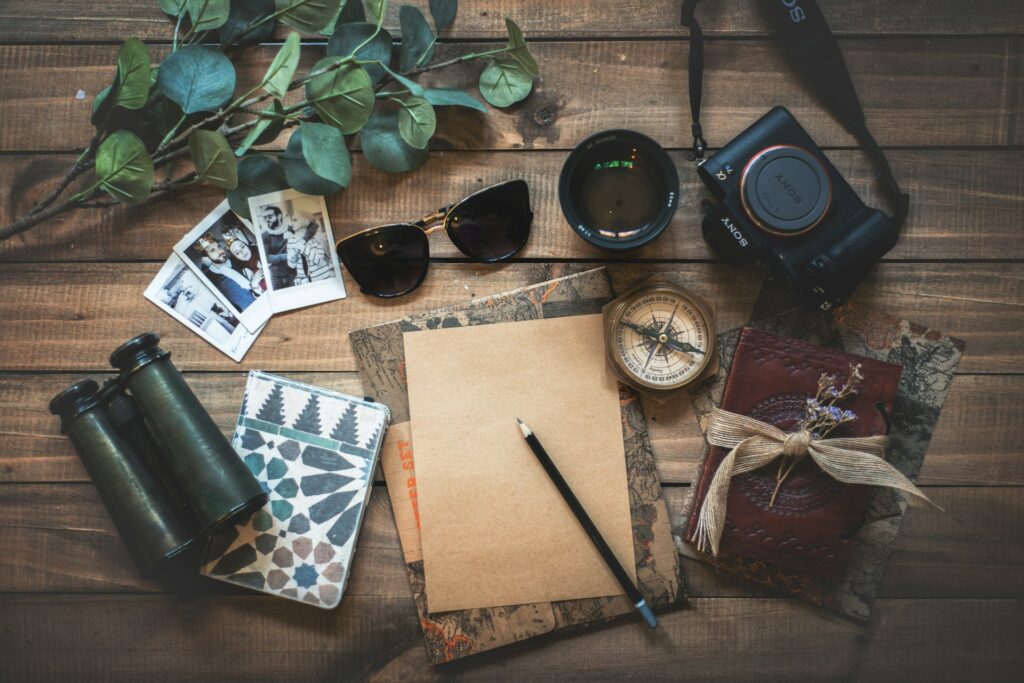
- Do not rely on the guide's binoculars. They have one pair. You need your own.
- Specs: 8×42 or 10×42 are the best specifications for safari. 8x magnification is easier to hold steady; 10x gets you closer but shakes more.
- Why essential? Binoculars aren't just for birds. They help you see the leopard’s eyes in the tree or the kill the lions are eating. Without them, you are a passive observer; with them, you are an active participant.
Power & Connectivity:
- Adapters: Botswana uses two main plug types:
- Type G: The British square 3-pin (common).
- Type M: The South African large round 3-pin (also common).
- Tip: Bring a universal adapter.
- Power Banks: Essential. Charging points are usually available in the vehicle or the main lodge, but having a battery pack for your phone during a 4-hour game drive is a lifesaver.
- Headlamp/Flashlight: Camps can be very dark at night. A headlamp is useful for reading in bed or navigating your tent.
5. Important Documents & Cash
In the digital age, we often forget paper. In Africa, paper is still king.
Documents (Keep physical copies and digital copies):
- Passport: Must be valid for 6 months beyond your travel dates and have at least 3 blank pages.
- Vaccination Certificates: Yellow Fever certificate (if traveling from a yellow fever zone).
- Travel Insurance: Printed copy of your policy number and emergency contact numbers.
- Kids' Birth Certificates: If traveling with minors (under 18), Botswana has strict rules. You may be asked to produce a certified unabridged birth certificate. While enforcement has relaxed recently, it is safer to have it.
Cash:
- Currency: The US Dollar is the most useful currency for tips and visas (especially for Zimbabwe/Zambia day trips).
- Condition of Notes: This is critical. Dollar bills must be post-2009 and in pristine condition. No tears, ink marks, or heavy creases. They will be rejected otherwise.
- Tipping: Bring small denominations ($1, $5, $10, $20). Breaking a $100 bill in the bush is impossible.
- Guide Tip: Approx $10-$20 per guest per day.
- Camp Staff Tip: Approx $10-$15 per guest per day (usually put in a communal box).
6. What NOT to Pack
Save space and weight by leaving these items at home:
- Hairdryer: Most camps run on solar power or generators and cannot handle the high wattage of a hairdryer. Some luxury lodges provide low-wattage ones. Check beforehand.
- Formal Wear: Even the most luxurious lodges (like Mombo or Jack’s Camp) have a relaxed dress code. “Smart casual” means clean trousers and a collared shirt. You do not need a suit, tie, or heels.
- Single-Use Plastic: Botswana is environmentally conscious. Avoid bringing plastic shopping bags.
- Drone: Drones are strictly banned in all National Parks and Reserves in Botswana without a very expensive, hard-to-get commercial permit. If you bring one, it will stay in your bag. Using it illegally can result in confiscation and heavy fines.
7. Seasonal Variations: The Packing Nuances
Your packing list should tweak slightly depending on when you travel.
If traveling in Summer (Nov – March):
- Rain Gear: Essential. A good waterproof poncho.
- Extra Socks: If your shoes get wet/muddy.
- Waterproof Bag: Dry bag for your camera gear on boats.
- Less Warm Gear: You still need one fleece, but you don't need the heavy parka.
If traveling in Winter (June – August):
- Serious Cold Gear: Beanie, scarf, gloves (fingerless gloves are great for photographers), and a thermal base layer.
- Hot Water Bottle: Lodges usually provide these, but be prepared for freezing mornings.
8. The “Safari Day Bag”
Finally, let’s talk about the bag that stays with you on the seat of the Land Cruiser. This is your survival kit for the day.
What goes in the Day Bag:
- Camera & lenses.
- Binoculars.
- Sunscreen & Lip balm.
- Sunglasses.
- Hat (wide-brimmed with a chin strap is best so it doesn't fly off).
- Insect repellent.
- Fleece/Windbreaker (for the morning chill).
- Water bottle (most lodges give you a reusable one).
- Wet wipes (for the “bush bathroom” stops and dusty hands).
9. Conclusion: Pack Light, Pack Right
The most common feedback we hear from clients when they return is: “I packed too many clothes.”
Remember, almost all safari lodges in Botswana offer a laundry service (often complimentary). It usually takes 24 hours. This means you really only need 3 or 4 outfits, which you can rotate.
Packing for a safari is about simplicity. It is about stripping away the excess of modern life and focusing on the essentials: comfort, protection, and the tools to witness the wild.
If you are still unsure about a specific item or have a unique medical requirement, ask us. At Travel 2 Botswana, we have packed for hundreds of safaris. We know exactly what fits in a Cessna and what you’ll be grateful to have when a herd of elephants walks by.
Still have questions? Contact our team for a personalized packing consultation based on your specific itinerary.
 ASK A QUESTION