The Green Season Secret: Why You Should Visit Botswana From November to April
From booking accommodations to arranging guided tours, we'll make sure your Botswana adventure exceeds all your expectations. Contact us today to start planning your dream trip!
Please share this article







In the high-stakes world of African travel planning, there is a prevailing doctrine that has persisted for decades: if you want to see Botswana, you must go in the winter.
Travel guides, brochures, and forums will endlessly repeat the same advice: book between June and October. They promise that this “dry season” is the gold standard—when the grass is beaten flat, the waterholes are crowded with desperate game, and the skies are a predictable, cloudless blue. While this narrative is true, it tells only half the story. By strictly adhering to the dry season calendar, thousands of travelers miss out on what is arguably Botswana’s most dramatic, photogenic, and life-affirming time of year.
Welcome to the Green Season.
Spanning roughly from November to April, the Green Season (often poetically referred to as the “Emerald Season”) is Botswana’s summer. It is a time of profound transformation. As the first rains fall, the dusty monochromes of the winter landscape are swept away, replaced by a vibrant explosion of color, new life, and raw energy.
For the savvy traveler willing to trade a little dust for a little mud, and a sweater for a raincoat, the rewards are extraordinary. This is the secret season that safari veterans whisper about. It is the time when the Kalahari wakes up, when the Delta breathes, and when the circle of life plays out in its most intense chapter.
This guide will explore every facet of the Green Season, debunking myths and highlighting the specific regions, wildlife behaviors, and logistical advantages that make this the most underrated time to visit Botswana.
1. The Myth of the Rain
The biggest deterrent for travelers considering this season is the fear of being washed out. The term “rainy season” conjures images of endless grey skies, torrential downpours that last for days, and game drives cancelled due to mud. In Botswana, this perception is largely inaccurate.
Botswana is a semi-arid country. Even in its wettest months, it is not a tropical rainforest environment. The rain here is dramatic, but it is rarely persistent.
The Typical Weather Pattern
A typical Green Season day begins with a brilliant, clear morning. The heat builds steadily throughout the day, humid and heavy, carrying the scent of wild sage and blooming acacia. By mid-afternoon, massive cumulus clouds—towering architectural marvels of white and grey—begin to stack up on the horizon.
In the late afternoon, the heavens open. These are spectacular, theatrical thunderstorms. Thunder rumbles across the vast plains, and lightning forks across the sky. The rain falls hard and fast, usually lasting for an hour or two. And then, just as quickly as it started, it stops. The sun breaks through the retreating clouds, bathing the landscape in a golden, washed-clean light. The temperature drops, leaving the evening cool and fresh.
The Impact on Safari
Far from ruining a safari, these storms enhance it. They clear the air of haze, offering crystal-clear visibility for photographers. They cool the land down, bringing animals out of the shade. Watching a storm roll across the Okavango Delta from the safety of a lodge deck is an experience as memorable as seeing a lion.
2. The Nursery of Africa: A Time of Birth
If the dry season is defined by survival—predator and prey locked in a struggle around shrinking waterholes—the Green Season is defined by birth. It is a time of plenty, and nature responds with a synchronous birthing event that is unrivaled in scale.
The arrival of the rains acts as a biological trigger. Within weeks of the first heavy downpours, the plains erupt with new life. Impala, wildebeest, tsessebe, and springbok drop their young almost simultaneously. This “predator swamping” strategy ensures that while many will be eaten, the majority will survive simply because the predators are overwhelmed by the sheer volume of prey.
The Scenes You Will Witness
For the visitor, this turns the bush into a chaotic, heartwarming nursery.
- The First Steps: You might witness a wildebeest calf, slick and wet, attempting its first wobbly steps just minutes after birth. Within an hour, it must be able to run to keep up with the herd.
- The Play: Nursery herds are full of energy. Lambs and calves chase each other through the long grass, pronking (leaping straight up in the air) and sparring, testing the muscles that will one day save their lives.
- The Mother’s Bond: The interaction between mothers and their young is tender and constant. Watching a mother elephant gently guide her tiny calf through a mud wallow, or a lioness grooming her cubs while they tumble over her paws, offers an emotional connection to the wildlife that is profound.
The Predator Dynamic
However, the African bush is not a Disney movie. This abundance of vulnerable life draws the attention of every carnivore in the territory. Lions, leopards, cheetahs, wild dogs, and hyenas are highly active during these months. They do not have to travel far to find food.
The dynamic between the fiercely protective mothers and the calculating hunters creates high-stakes drama. You will see cheetahs using the taller grass to ambush nursery herds, or wild dogs coordinating split-second attacks. It is nature in its rawest, most honest form. For the wildlife enthusiast, the Green Season offers the most complete picture of the ecosystem.
3. The Great Zebra Migration: Botswana's Best-Kept Secret
When people think of migration in Africa, they think of the Serengeti in East Africa. Few realize that Botswana hosts the longest land mammal migration on the continent—and it happens exclusively during the Green Season.
This is not a story of crossing rivers; it is a story of chasing the rain.
The Route
As the rains fill the ephemeral waterholes in the arid interior, instinct drives thousands of Burchell's zebras (often accompanied by blue wildebeest) to leave the permanent water sources of the Chobe and Okavango rivers. They trek southwards, covering hundreds of kilometers, heading for the Makgadikgadi and Nxai Pan National Parks.
Why? Because the salt pans, which are bone-dry and inhospitable in winter, transform into lush pastures filled with mineral-rich, nutritious grass.
The Spectacle
Visiting these desert parks between December and March offers a spectacle of scale. You will see the horizon moving as thousands of black and white stripes cover the plains. The air is filled with their distinctive “kwa-ha” calls.
Unlike the migration in East Africa, which is often surrounded by hundreds of tourist vehicles, the Botswana migration is a solitary experience. You can park your vehicle on the edge of Nxai Pan and be the only human witnessing a herd of 5,000 zebras grazing under the baobab trees. Following closely behind these herds are the famous black-maned Kalahari lions and swift cheetahs, thriving on the abundance of food in the desert.
4. A Metamorphosis of Landscape
Botswana in the dry season is a land of beige, grey, and brown. It has a stark, skeletal beauty, but it can feel harsh. In the Green Season, the country undergoes a makeover that feels like a magic trick.
The Colors
The transformation is startlingly fast. The scorched earth is carpeted in a layer of lush, velvety green grass. The Mopane woodlands, usually bare and grey, burst into full leaf, creating emerald cathedrals of shade.
- Wildflowers: This is the only time to see the desert bloom. Patches of wild sesame, devil’s thorn (with its yellow flowers), and stunning water lilies in the pans create a riot of color.
- The Sky: The sky becomes a major character in the landscape. In winter, the sky is often a flat, pale, hazy blue due to dust/smoke from bushfires. In summer, the rain scrubs the air clean. The sky becomes a deep, saturated indigo, contrasting sharply with the white clouds and the green earth.
The Smell of Summer
You cannot describe the Green Season without mentioning the smell. There is a specific word for the scent of rain falling on dry earth: petrichor. In Botswana, this scent is mixed with the resinous, spicy smell of Wild Sage and the sweet perfume of the flowering Acacia trees. It is an intoxicating, fresh aroma that stays with you long after you leave.
5. A Photographer’s Dream
Ask any professional wildlife photographer when they prefer to shoot in Botswana, and many will tell you: November through March. While the general tourist is told to avoid the rain, the photographers are running toward it.
Why the Green Season is Superior for Photography:
- The Contrast: In winter, a tan lion on tan grass against a grey background can look flat. In summer, the vibrant green grass makes the subjects “pop.” The orange coat of an impala, the black and white of a zebra, and the grey of an elephant all stand out beautifully against the saturated greenery.
- The Light: The harsh midday sun of winter can wash out images. In summer, the cloud cover acts as a giant soft-box, diffusing the light and allowing for shooting throughout the day, not just at dawn and dusk.
- Dramatic Backgrounds: A storm brewing in the background adds drama, mood, and context to wildlife shots. A giraffe silhouetted against a purple storm cloud is a far more compelling image than one against a plain blue sky.
- Healthier Subjects: The animals are in peak condition. They are well-fed, their coats are shiny, and they are energetic. Winter animals can often look gaunt and dusty.
6. The Birding is Unmatched
If you are a birder, or even if you have a passing interest in ornithology, the Green Season is not just a good time to visit; it is the only time to visit.
Botswana is a birding hotspot year-round, but from November onwards, the population explodes. This is when the migratory species arrive from Europe, Asia, and other parts of Africa to breed and feed in the abundance of insects and fruit.
The Avian Highlights:
- The Color: The bush is flashed with the electric blue of the Woodland Kingfisher (whose trilling call is the soundtrack of the summer) and the vivid crimson of the Southern Carmine Bee-eater.
- The Raptors: Huge numbers of Steppe Eagles, Wahlberg’s Eagles, and Amur Falcons arrive to feast on the emerging termites. Seeing a “termite alate” emergence, where millions of flying ants take to the sky, attracting hundreds of birds in a feeding frenzy, is a National Geographic moment.
- The Waterbirds: As the pans fill with water, they attract flamingos, pelicans, storks, and waders. Nata Bird Sanctuary becomes a pink haze of breeding flamingos if the water levels are right.
- The Skimmers: On the Chobe River, the African Skimmers are nesting on the sandbanks, gliding just millimeters above the water to snap up fish.
Even if you have never owned a pair of binoculars, the sheer volume and variety of birdlife during this season is infectious. You will find yourself excitedly pointing out a Lilac-breasted Roller or a Paradise Flycatcher before the trip is done.
7. The Value Proposition: Luxury for Less
Botswana is famously a high-value, low-volume destination. It is one of the most exclusive safari destinations in Africa, and in the peak dry season (July-August), the price tag reflects that. Rates at premier camps can be eye-watering.
However, the Green Season is the travel industry’s best-kept secret for value. Because demand is lower, lodges and camps drop their rates significantly—often by as much as 40% to 60%.
What This Means for You:
- Access to the Best: You might find that a world-famous, ultra-luxury camp in the heart of the Okavango Delta, which is completely out of budget in July, becomes affordable in February. You get the same room, the same guide, the same food, and the same service for half the price.
- No Single Supplements: Solo travelers are often penalized with high single supplement fees. During the Green Season, many camps waive these fees entirely to encourage travel, making it the ideal time for solo adventurers to explore.
- Longer Stays: With lower nightly rates, your budget stretches further. Instead of a rushed 5-day trip, you can afford a 9-day itinerary, allowing you to slow down and truly soak up the atmosphere of different regions.
- Last-Minute Availability: In peak season, you often need to book 12-18 months in advance. In the Green Season, you can often find space at top lodges with just a few months' (or even weeks') notice.
8. Exclusivity: Having the Bush to Yourself
One of the primary reasons we travel to Africa is to find solitude—to escape the noise, traffic, and congestion of modern life. However, in the peak dry season, the most popular sightings in Chobe or Moremi can sometimes attract a cluster of vehicles.
In the Green Season, the crowds vanish.
It is not uncommon to stay at a lodge and realize you are the only guests there. You essentially get a private camp experience—private vehicle, private guide, private dining—without paying for it.
On game drives, the sense of isolation is profound. You can spend an hour watching a leopard sleep in a Marula tree without another vehicle pulling up to break the silence. You can stop for sundowners on a lagoon edge and hear nothing but the frogs and the ice clinking in your glass.
This solitude changes the nature of the safari. The guides are under less pressure to “perform” or race to the next sighting. They can take the time to interpret the smaller wonders of the bush—the insects, the medicinal plants, the tracks in the mud. It becomes a deeply personal, unhurried, and meditative journey.
9. Regional Guide: Where to Go in the Green Season
Not all areas of Botswana are created equal during the rains. While the whole country is lush, wildlife movements dictate where you should focus your itinerary.
The Kalahari (Central Kalahari Game Reserve & Nxai Pan)
The Verdict: Absolute Prime Time.
The desert regions are the big winners of the Green Season. In winter, these areas are harsh and game is sparse. In summer, the fossil river valleys of the Kalahari transform into sweet grazing grounds. Huge herds of oryx, springbok, and wildebeest congregate here, and the famous black-maned lions are never far behind. This is the best time to see cheetahs running at full speed across the pans.
The Chobe Riverfront
The Verdict: Excellent for Birds and Babies, Different for Elephants.
In winter, the Chobe River hosts tens of thousands of elephants. In the Green Season, the elephants disperse into the teak woodlands because there is water everywhere in the clay pans. You will still see elephants, but in smaller family groups rather than massive herds. However, the predator action is high, the birding is spectacular, and the boat cruises are magical with the dramatic skies.
The Okavango Delta
The Verdict: Stunning Scenery, Resident Game.
It is important to understand the Delta's water cycle. The floodwaters from Angola actually arrive in the dry season (winter). In the Green Season (summer), the water levels in the channels are often at their lowest, though localized rain fills the lagoons.
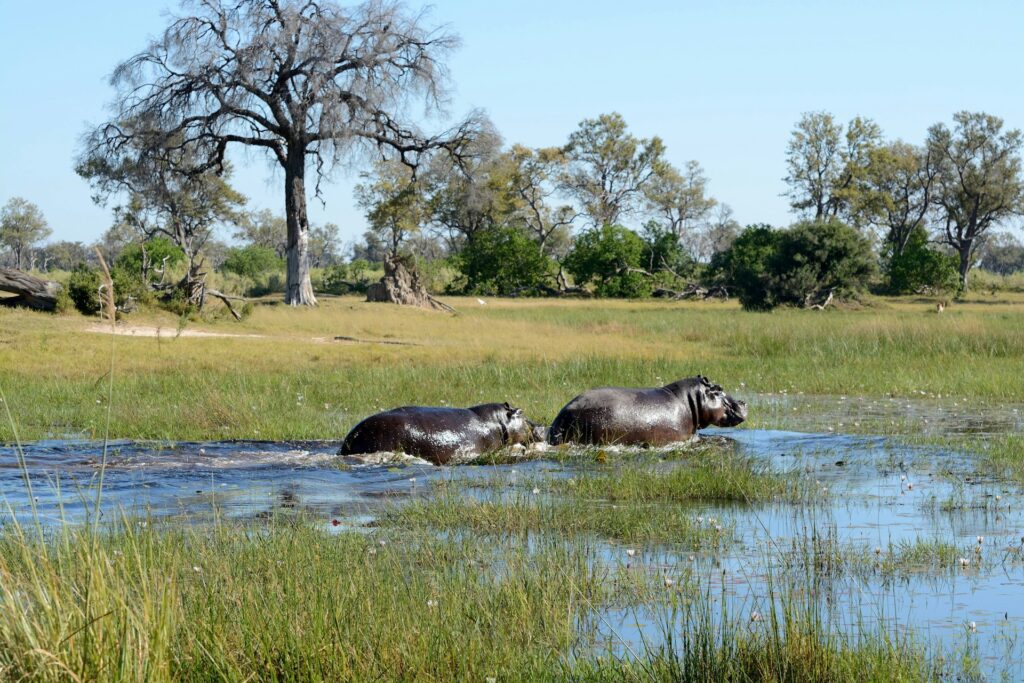
The game viewing here remains excellent because the animals are non-migratory. You will still see lions, leopards, and hyenas patrolling their territories. The scenery is lush, and the boat/mokoro activities are still possible in the permanent channels. It is arguably the most beautiful time to see the Delta.
The Linyanti & Savuti
The Verdict: A Hidden Gem.
Savuti, famous for its predator density, is phenomenal in the summer. The Savuti Marsh turns green, attracting the zebra migration and the buffalo herds. It is a battlefield for lions and hyenas. The Linyanti concessions offer exclusive, private game viewing in a lush woodland setting.
10. The Practicalities: Tips for Green Season Travel
To truly enjoy the Green Season, you need to manage your expectations and pack correctly.
The Heat
It will be hot. October and November are the “suicide months” where temperatures spike before the rains. By December and January, the rain cools things down, but humidity rises. Midday temperatures generally range from 30°C to 35°C (86°F – 95°F).
- Tip: Choose lodges with air-conditioning or swimming pools. The “siesta” time between 1:00 PM and 3:30 PM is essential.
The Mud
The roads in national parks can become muddy and slippery. “Black cotton soil” is notorious for trapping vehicles.
- Tip: If you are self-driving, you need to be an experienced 4×4 driver and travel in a convoy. If you are flying into lodges, this isn't an issue for you—the lodge guides are experts at navigating the terrain.
The Insects
Yes, bugs are more prevalent in summer. This includes mosquitoes, moths, and beetles.
- Tip: Malaria prophylaxis is highly recommended (consult your doctor). Pack good insect repellent. Most luxury lodges have mosquito nets and fans which keep bugs at bay. However, the insects are also part of the ecosystem—the butterflies and dragonflies in summer are incredibly beautiful.
The “Dispersal” Factor
Because there is water available in puddles and seasonal pans throughout the bush, animals are not forced to congregate at the main rivers. They disperse into the thick mopane scrub.
- Tip: You might have to work a little harder to find the animals compared to the dry season. The vegetation is thicker, which can obscure visibility. However, the quality of the sightings—the interactions, the colors, the behavior—often makes up for the quantity.
Conclusion: A Season for the Soul
The Green Season in Botswana is not for the traveler who wants to tick a list of animals off a checklist in the shortest time possible. It is not for the person who is afraid of a little mud or a midday thunderstorm.
It is for the traveler who wants to feel the pulse of Africa. It is for the person who wants to see the next generation of wildlife taking their first breaths. It is for the photographer chasing the light, the birder chasing the color, and the romantic chasing the solitude.
Visiting Botswana from November to April allows you to see the country at its most vibrant, its most dramatic, and its most alive. You will leave with dust on your boots, perhaps a little mud on your tires, but with a soul full of the emerald beauty of the African summer. And, you’ll likely have saved enough money to come back and do it all again.
Ready to explore the Green Season?
Contact Travel 2 Botswana today. We know which camps offer the best summer specials, which areas have the highest predator action, and how to craft an itinerary that keeps you cool, comfortable, and right in the heart of the action.
 ASK A QUESTION