Chobe vs. The Okavango Delta: Which Safari Experience is Right for You?
From booking accommodations to arranging guided tours, we'll make sure your Botswana adventure exceeds all your expectations. Contact us today to start planning your dream trip!
Please share this article







When planning a safari to Botswana, the map of the country is dominated by two massive, world-famous geological features. To the north lies the Chobe River, a lifeline of water teeming with elephants. To the northwest lies the Okavango Delta, a shimmering jewel of islands and waterways visible from space.
For the first-time visitor, the choice can be agonizing.
- “Do I go to Chobe for the elephants, or the Delta for the mokoro trips?”
- “Is the Delta worth the extra cost?”
- “Can I do both in one week?”
The truth is, while both destinations offer incredible wildlife viewing, they provide fundamentally different safari experiences. Comparing them is not about deciding which is “better”—it is about deciding which is better for you.
This comprehensive guide breaks down the differences between the Chobe National Park and the Okavango Delta based on landscape, wildlife, activities, accessibility, cost, and vibe, helping you build the perfect Botswana itinerary.
1. The Landscape: Rivers vs. Floodplains
The geography of these two regions dictates the entire feel of your safari.
Chobe: The River of Giants
The Chobe experience is defined by the Chobe River. This broad, permanent waterway forms the border between Botswana and Namibia. The northern part of the park, the Chobe Riverfront, is where most tourism is concentrated.
- The Vibe: Think “National Geographic Documentary.” The river is the stage, and the animals are the actors. The landscape is a mix of floodplains along the riverbank, backing into thick teak forests and mopane scrub.
- The View: It is open, panoramic, and busy. You are looking at a wide expanse of water, green islands, and the Namibian shoreline on the other side.
- The Seasonality: The river is permanent, so it is a year-round attraction. However, in the dry season (May-October), the contrast between the lush riverbank and the dry interior is stark, drawing thousands of animals to the water's edge.
The Okavango Delta: The Watery Wilderness
The Delta is not a river in the traditional sense; it is an alluvial fan. The Okavango River flows from Angola and spills onto the Kalahari sands, creating a maze of lagoons, channels, and islands that eventually evaporates.
- The Vibe: Think “Secret Garden.” It is intimate, intricate, and secluded. You are surrounded by tall papyrus reeds, water lilies, and palm islands. The landscape changes around every bend.
- The View: It is a mosaic of land and water. One minute you are in a boat on a deep channel; the next you are driving through a dry acacia woodland or crossing a grassy floodplain.
- The Seasonality: The Delta is dynamic. Water levels rise and fall with the annual flood (usually peaking between June and August). Some camps are “wet camps” (permanent water), some are “dry camps” (land-based game viewing), and some offer both depending on the season.
2. The Wildlife: Density vs. Diversity
Both areas are home to the Big Five (though rhinos are elusive in both), but the density and behavior of the animals differ significantly.
Chobe: The Land of the Elephant
Chobe is famous for one thing above all else: Elephants. The park is home to the largest concentration of African elephants on the planet (estimated over 120,000).
- The Scale: You don't just see an elephant in Chobe; you see hundreds. In the dry season, it is not uncommon to see herds stretching as far as the eye can see along the riverbanks. You will see them swimming, bathing, playing, and crossing the river with tiny calves in tow.
- The Supporting Cast: Huge herds of Cape Buffalo (sometimes numbering in the thousands), pods of hippos, and large crocodiles are guaranteed. The predator density is high, with lions frequently seen hunting buffalo, and leopards patrolling the riverine treeline.
- The Experience: It is high-impact, high-volume viewing. You will likely tick off most of your checklist in a single afternoon.
Okavango Delta: The Sanctuary of Surprises
While Chobe is about mass congregation, the Delta is about diversity and rare species. The wildlife here is spread out over a massive area.
- The Specialists: This is the best place to see the semi-aquatic Red Lechwe and the shy Sitatunga antelope. It is also a stronghold for the endangered African Wild Dog, with the Moremi Game Reserve and private concessions offering some of the best sightings in Africa.
- The Cats: Lion and leopard sightings are phenomenal, particularly on the islands (like Chief’s Island). Because the terrain is difficult for prey to traverse, predator-prey interactions are frequent.
- The Experience: The viewing is harder work than Chobe, but arguably more rewarding. You are tracking animals through a complex environment. Seeing a leopard draped over a sausage tree branch in the Delta feels like a private discovery.
3. The Activities: What Will You Do All Day?
This is where the two destinations diverge the most.
Activities in Chobe
Chobe is accessible and regulated. Most activities take place inside the National Park, which has strict rules (no off-roading, no night drives, strict gate times).
- Game Drives: Conducted in open 4×4 vehicles along the riverfront roads. These can be busy with other vehicles.
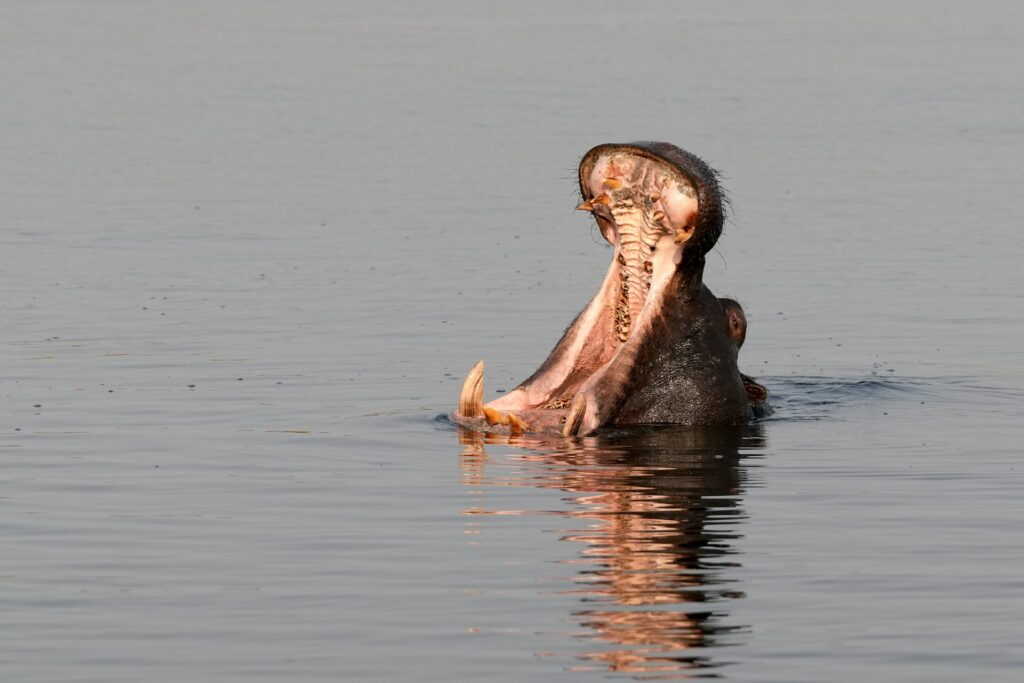
- Boat Cruises: This is Chobe's USP. Cruising the river on a double-decker boat or a smaller skimmer is magical. You get eye-level with elephants drinking and hippos yawning. The sunsets from the water are legendary.
- Tiger Fishing: Available on the river (usually outside the park boundaries).
- Day Trips: Chobe is close to Zimbabwe, making day trips to Victoria Falls easy.
Activities in the Okavango Delta
The Delta offers a wider variety of activities, especially if you stay in a private concession (areas of land leased by lodges) rather than the Moremi Game Reserve public park.
- Mokoro Excursions: The quintessential Delta experience. You are poled silently through the shallow waterways in a traditional dugout canoe. It is about peace, birds, and frogs, not big game.
- Walking Safaris: Many private camps offer guided bush walks, allowing you to focus on tracking and smaller details.
- Night Drives: In private concessions, you can use spotlights to find nocturnal animals like hyenas, bushbabies, and leopards.
- Off-Roading: Private concessions allow guides to drive off the track to follow predators, getting you much closer to the action.
- Helicopter Flights: Scenic flights (often with doors off) offer a jaw-dropping perspective of the waterways and animal herds from above.
4. Accessibility and Logistics
How you get there plays a big role in the cost and style of the trip.
Chobe: The Accessible Safari
Chobe is incredibly easy to get to.
- Kasane Airport (BBK): The gateway to Chobe. You can fly here directly from Johannesburg or Gaborone.
- Road Access: The lodges are a 10-15 minute drive from the airport. No small planes are required.
- Victoria Falls: You can transfer by road from Victoria Falls (approx. 90 minutes) to Chobe, making it easy to combine the two.
- Self-Drive: Chobe is a popular destination for self-drive 4×4 enthusiasts.
Okavango Delta: The Fly-In Safari
The Delta is remote. Most of the best lodges are located on islands deep within the wetland, inaccessible by road.
- Maun Airport (MUB): The gateway to the Delta. From here, you must take a light aircraft (Cessna Caravan) to your lodge's private airstrip.
- The “Hop”: These flights are part of the adventure, offering incredible views, but they add a significant cost and logistical layer to the trip.
- Isolation: Once you are there, you are there. There is no popping into town for supplies.
5. The Vibe: Crowds vs. Exclusivity
This is often the deciding factor for luxury travelers.
Chobe: The Social Safari
Because Chobe is accessible by road and close to Victoria Falls, it is busy.
- Traffic: In the high season, you will see other vehicles at sightings. The riverfront can get congested with game drive vehicles and boats.
- Lodges: The hotels and lodges in Kasane (the town bordering the park) tend to be larger, resort-style properties (50+ rooms). They offer a social atmosphere, buffets, and large pools.
- Pros: Great for meeting people, lower cost, more amenities, reliable Wi-Fi.
- Cons: Less privacy, the “wilderness” feel is diluted by the presence of other tourists.
Okavango Delta: The Exclusive Safari
The Delta focuses on high-value, low-volume tourism.
- Traffic: In private concessions, the number of vehicles is strictly limited. You will likely be the only vehicle at a sighting.
- Lodges: Camps are small and intimate (usually 8-12 tents maximum). They are unfenced, meaning animals wander through camp.
- Pros: Total immersion in nature, silence, personalized service, private feeling.
- Cons: Significantly more expensive, remote (limited Wi-Fi/connectivity).
6. The Cost: Budgeting Your Trip
There is a stark price difference between the two.
Chobe: Affordable Luxury
Because you don't need expensive charter flights and the lodges are larger (offering economies of scale), Chobe is more budget-friendly.
- You can find excellent mid-range accommodation.
- It is the best entry point for families or those on a tighter budget who still want a world-class wildlife experience.
Okavango Delta: The Splurge
The Delta is one of the most expensive safari destinations in the world.
- Logistics (flying in fuel, food, and staff) drive up the price.
- You are paying for the exclusivity and the huge concessions of land.
- However, the value is undeniable—it is a once-in-a-lifetime experience that few people get to see.
7. The Verdict: How to Choose?
Still undecided? Here is our expert advice based on different traveler types.
Choose Chobe If:
- You are short on time: You can see an incredible amount of game in just 2 days.
- You are watching your budget: You want a 5-star experience without the 5-star price tag of the Delta.
- You love elephants: It is the best place in the world to see them.
- You want to relax: The boat cruises are a very leisurely way to see game compared to bumpy game drives.
- You are visiting Victoria Falls: It is an easy add-on.
Choose the Okavango Delta If:
- You want exclusivity: You want to escape the crowds and feel like you are the only person on earth.
- You are a birdwatcher: The diversity of habitats makes it superior for birding.
- You want adventure: Walking safaris, mokoros, and sleeping under the stars appeal to you.
- You are a photographer: The landscapes and light in the Delta are unmatched.
- It is a special occasion: Honeymooners will find the romance of the secluded Delta camps unforgettable.
The Ultimate Solution: Combine Them!
The best Botswana itinerary doesn't choose between them—it combines them. They are the yin and yang of the Botswana safari.
The Classic Itinerary: Start with 2 nights in Chobe. The high density of game provides instant gratification and excitement. It’s a great introduction to safari. Then, fly to the Okavango Delta for 3 or 4 nights. The pace slows down, the crowds disappear, and you immerse yourself in the wilderness.
By doing both, you get the river and the wetland, the herds and the hermits, the boat and the bush walk.
Ready to plan your dual-destination safari? At Travel 2 Botswana, we specialize in seamless itineraries that link the Chobe Riverfront with the hidden islands of the Delta. Contact us today to build your custom Botswana adventure.
 ASK A QUESTION